
Greeting From The Dean of Untar’s Faculty of Psychology
Dr. P. Tommy Y. S. Suyasa, M.Si., Psychologist

Welcome to the Faculty of Psychology at Tarumanagara University (F.Psi. UNTAR)
The Faculty of Psychology (F.Psi.) at UNTAR is one of the leading private psychology faculties in Indonesia, established in 1994—specifically on July 7, 1994. Its establishment was initiated by Prof. Dr. Singgih D. Gunarsa, Psychologist; with the support of Dr. Seto Mulyadi, Psychologist; Dr. Monty P. Satiadarma, MS/AT, MFCC, DCH, Psychologist; Dr. Tom Surjadi, M.P.H.; Dra. Ery Dewayani, MMSI; as well as Mr. Ir. Jap Tji Beng, MMSI., M.Psi., Ph.D., P.E., M.ASCE.
Dr. Seto Mulyadi, Psychologist (Kak Seto), as the first Dean (1994–1998), laid the institutional and academic foundations. Dr. Monty P. Satiadarma, MS/AT, MFCC, DCH, Psychologist (1998–2006), strengthened the direction of academic development and professionalism. Dr. Rostiana, M.Si., Psychologist (2006–2010), and Dra. Henny Wirawan, M.Si., Psychologist (2010–2014) focused on strengthening governance and ensuring educational quality. Dr. Rostiana, M.Si., Psychologist (2014–2022), returned to continue the work of consolidation and instilling core values. Dr. Sri Tiatri, Ph.D., Psychologist (2022–2026), continues to strive to develop collaboration and foster a spirit of competition in research and publications.
We would like to thank the seniors and predecessors of the UNTAR Faculty of Psychology academic community for laying the academic foundation from the faculty’s establishment through its development. These pioneers have made the Faculty of Psychology at UNTAR one of the most trusted private psychology faculties in Indonesia, contributing to the delivery of psychology education at the undergraduate, master’s, and General Psychologist Professional Education levels; all while maintaining an excellent track record in the Tri Dharma of Higher Education (teaching, research, and community service).
Today, all members of the UNTAR Faculty of Psychology academic community are committed to maintaining educational quality and continuing the legacy of our predecessors. Guided by the values of Entrepreneurship, Professionalism, Integrity, and Caring Community (EPIC), the Faculty of Psychology at UNTAR is committed to continuing to provide high-quality higher education in psychology in Southeast Asia through teaching, research and development, and the application of psychology. In continuing its contributions, the Faculty of Psychology at UNTAR can serve as an instrument that helps the global community achieve the Sustainable Development Goals (SDGs) or assists the Government of the Republic of Indonesia in realizing the Asta Cita.
There are at least four themes or areas of the SDGs and Asta Cita that can serve as a guiding framework for the Faculty of Psychology (F.Psi.) at UNTAR. First, SDG No. 3 (Good Health and Well-being), which is roughly equivalent to Asta Cita No. 1 (Strengthening the ideology of Pancasila, democracy, and human rights). UNTAR’s Department of Psychology can contribute by strengthening humanities courses and implementing mental health education to promote psychological well-being. The department can also help improve mental health literacy and expand access to psychological services for the public.
Second, SDG No. 4 (Quality Education), which corresponds to Asta Cita No. 4: “Developing high-caliber human resources through education, science, technology, and health.” The UNTAR School of Psychology can contribute by implementing higher education based on Outcome-Based Education (OBE). With an OBE approach, students not only understand theory but are also guided to become capable and skilled in applying their knowledge and theories, preparing them to contribute to society.
Third, SDG No. 8 (Decent Work and Economic Growth) corresponds to Asta Cita No. 3 (Creating quality jobs and promoting entrepreneurship). The Faculty of Psychology at UNTAR can contribute by strengthening occupational psychology, fostering an understanding of organizational culture, and enhancing talent management, as well as by continuing to collaborate with the business and industrial sectors through internship programs or community service initiatives (seminars, assessments, consultations, psychoeducation, training, etc.).
Fourth, SDG No. 16 (Peace, Justice, and Strong Institutions) corresponds to Asta Cita No. 8 (Strengthening a harmonious coexistence with nature, culture, and the social environment). The Faculty of Psychology at UNTAR can contribute through the application of positive psychology, the cultivation of character traits such as integrity, empathy, resilience, and ethics in social life, including in institutional management.
By contributing to the achievement of the above SDGs (as the United Nations’ [UN] global development agenda) as well as to the achievement of the Asta Cita (as the agenda of the Government of the Republic of Indonesia), the Department of Psychology (F.Psi.) UNTAR can become a strategic institution of higher education in producing outstanding human resources—that is, individuals who possess initiative (entrepreneurship), professional competence (professionalism), ethical integrity (integrity), and social skills (caring community), and who are capable of embodying, representing, or serving as ambassadors of psychological well-being, both at the national and global levels.
The academic community of the Faculty of Psychology at UNTAR should not only be able to understand and develop psychological concepts and theories, but also be able to apply psychology in practical ways in daily life; manage emotions and stress adaptively; carry out and complete various tasks and services; communicate empathetically and assertively; and address differences and conflicts constructively.
The academic community of the Faculty of Psychology at UNTAR must remain enthusiastic and tireless in creating a conducive, collaborative, and future-oriented academic environment. With an optimistic attitude and an awareness of our respective roles, we are confident that the Faculty of Psychology at UNTAR can make a tangible contribution, at least to our immediate surroundings (parents/family, fellow students, and fellow faculty members/staff). Although it may not be explicitly stated, always remember that the academic community of the Faculty of Psychology at UNTAR represents the greatest hope for many in creating a world that is more psychologically prosperous.
May the Faculty of Psychology at UNTAR realize and carry forward the aspirations of our seniors and predecessors; remain one of the most trusted private psychology faculties in Indonesia; consistently support the government’s efforts to achieve the Asta Cita; and contribute to and support the global community in achieving the SDGs.
Thank you to the entire academic community of the Faculty of Psychology at UNTAR (faculty members, students, and staff/educational administrative personnel). Thank you to our stakeholders (the Tarumanagara Foundation, Tarumanagara University, the Government of the Republic of Indonesia, students’ parents and families, the community, and all other parties). We all recognize that the success of the Faculty of Psychology at UNTAR is due to the support and outstanding contributions of the entire academic community of the Faculty of Psychology at UNTAR and our stakeholders. May we all remain healthy, strong, and under the protection of God Almighty 🙏😇🌻🪷
Sincerely,
Dean of the Faculty of Psychology, UNTAR
P. Tommy Y. S. Suyasa
Our Leaders

Head of Bachelor of Psychology Study Program
Dr. Zamralita, M.M., Psychologist
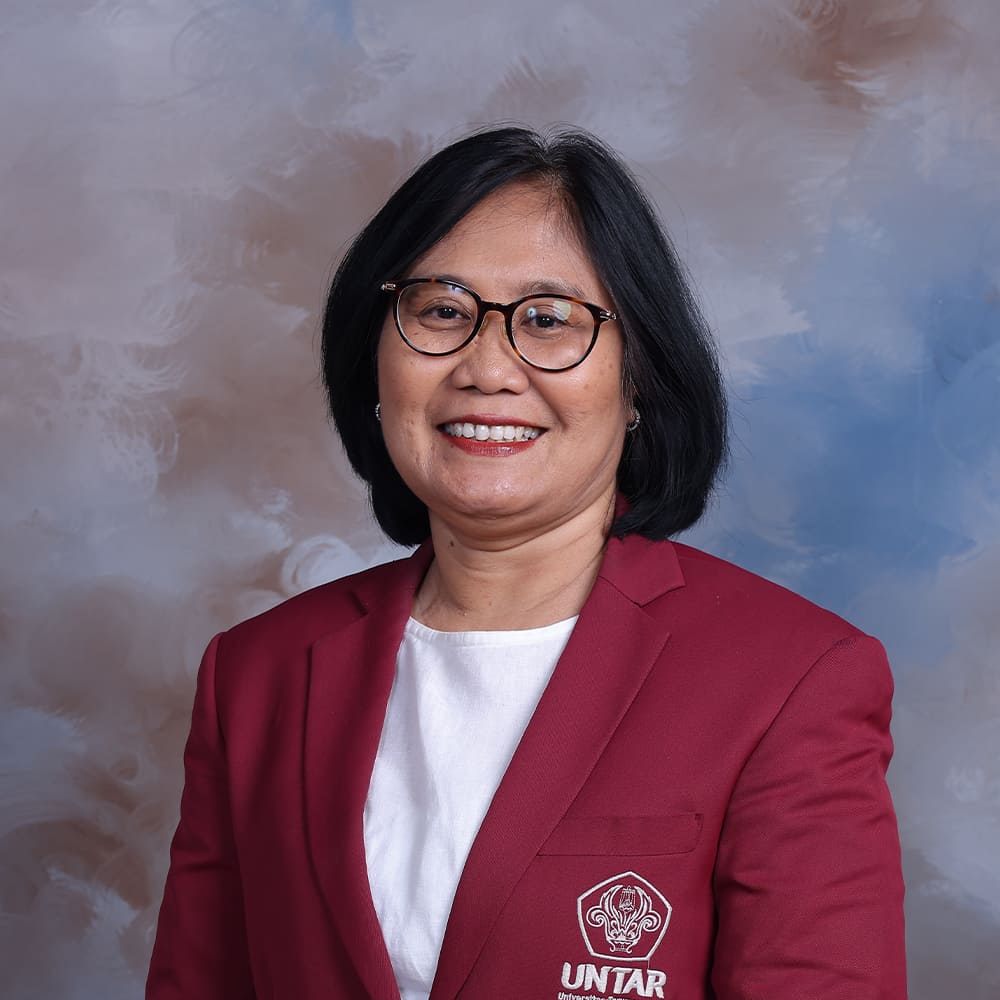
Head of Master of Science Psychology Study Program
Dr. Fransisca I. R. Dewi, M.Si.

Head of Master of Professional Psychology Study Program
Dr. Naomi Soetikno, M.Pd., Psychologist