

- A positive parent–child relationship is associated with a child’s ability to manage emotions in a more adaptive way.
- A supportive parental response can foster a child’s emotional regulation.
- Domestic turmoil and unsupportive emotional responses are associated with an increased risk of emotional and behavioral problems.
A study titled “A Systematic Review: The Role of Parent-Child Relationship and Parental Emotional Socialization on Children’s Emotion Regulation” is the latest publication by students and faculty members of the Faculty of Psychology at Tarumanagara University to be indexed in SINTA 3 in a reputable national journal.
The ability to regulate emotions is a fundamental skill that children should possess during their preschool and elementary school years. At this stage, children should ideally be able to follow simple rules, refrain from expressing emotions through physical aggression, and interact adaptively with their peers. This has a positive impact on the dynamics of children’s social interactions in their school or play environments.
In reality, some findings reveal a different situation. A 2024 study in Maros Regency found that kindergarten students still struggle to wait in line and often tease their peers. A similar phenomenon is also observed among elementary school students, who cry easily when they start school and experience problems with discipline and social interaction. This can then become a source of concern for the children’s parents.
Field observations conducted through the MBKM program at TK X in West Jakarta from March to June 2024 also showed that children still express anger by shouting, hitting their peers, or crying when their desires are not met. This situation reflects the children’s inability to regulate their emotions, which can hinder their academic progress and trigger anxiety.
Based on the phenomenon described above, a research group consisting of one student and two faculty members from the Faculty of Psychology at Untar produced a national publication that appeared in *Buletin Psikologi*, a scientific journal from Gadjah Mada University (UGM). This research was a collaboration between a student and two faculty members from the Faculty of Psychology at Tarumanagara University. Farhah Suruurah Rizqiah Sanaky student, Dr. Riana Sahrani lecturer from Professional Psychology Education Program (Professional Level), and Dr. Fransisca Iriani Roesmala Dewi, M.Si., Psikolog lecturer from Master of Science in Psychology Program.
The study was conducted using a systematic review method based on the PRISMA 2020 guidelines, with a literature search conducted across six international databases. Of the total 44,837 articles found, seven met the criteria and were analyzed further. The screening and analysis process was conducted by a research team consisting of faculty members and students.
The results of the review indicate that the quality of the parent–child relationship and parents’ emotional response patterns are key mechanisms in the development of children’s emotional regulation. Positive relationships are associated with children’s ability to manage their emotions adaptively, while family turmoil and unsupportive responses increase the risk of emotional and behavioral problems.
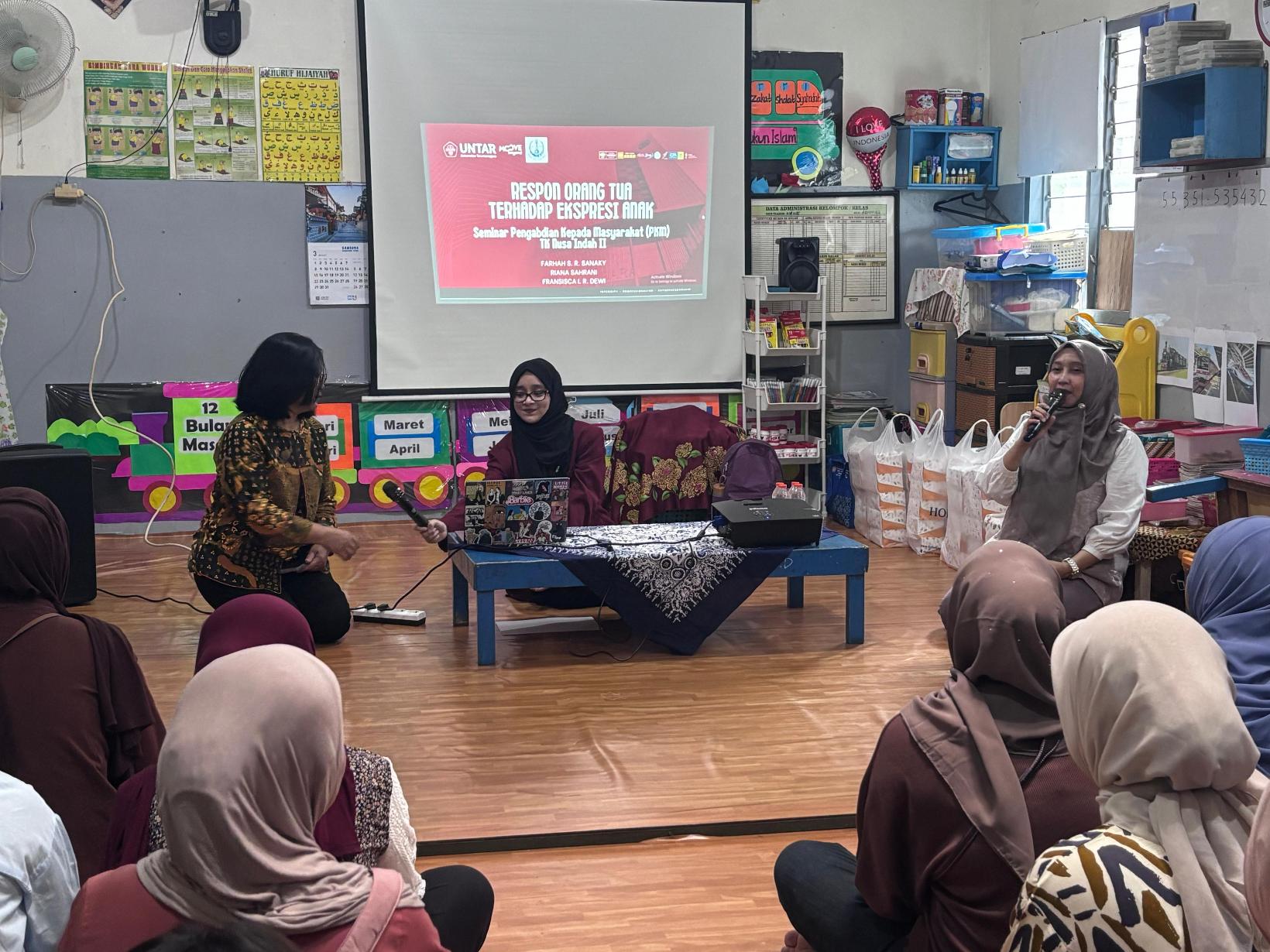
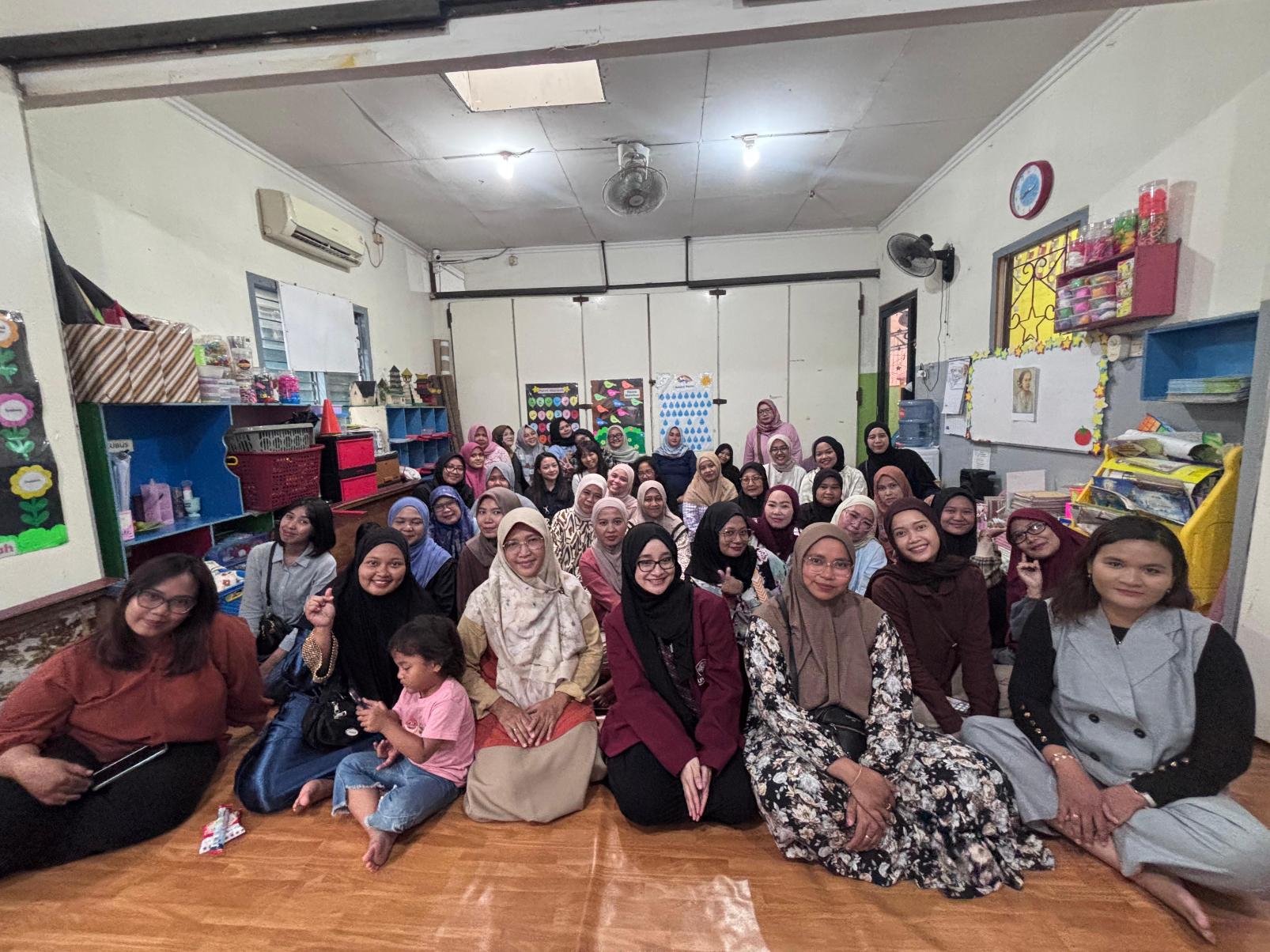
These findings were then applied in a community service (PkM) activity in the form of a seminar for parents at Kindergarten X in West Jakarta. The event went smoothly and received positive feedback from both participants and partners. Although no written assessment tools were used, direct observation and feedback indicate that the seminar provided tangible benefits to the parents.
Information on Degree Programs at the Faculty of Psychology, Tarumanagara University